From nuclear reactors to 5G: NASA outlines key technologies for Moon base
The US space agency is developing seven critical technologies required to establish a sustainable human presence on Earth's satellite.
 💡Tech
Photo: RBC-Ukraine
Key points
- NASA is developing seven critical technologies for lunar habitation
- The Lunar Reactor-1 is scheduled for delivery to the Moon in 2030
- Using local resources will reduce the need for supplies from Earth
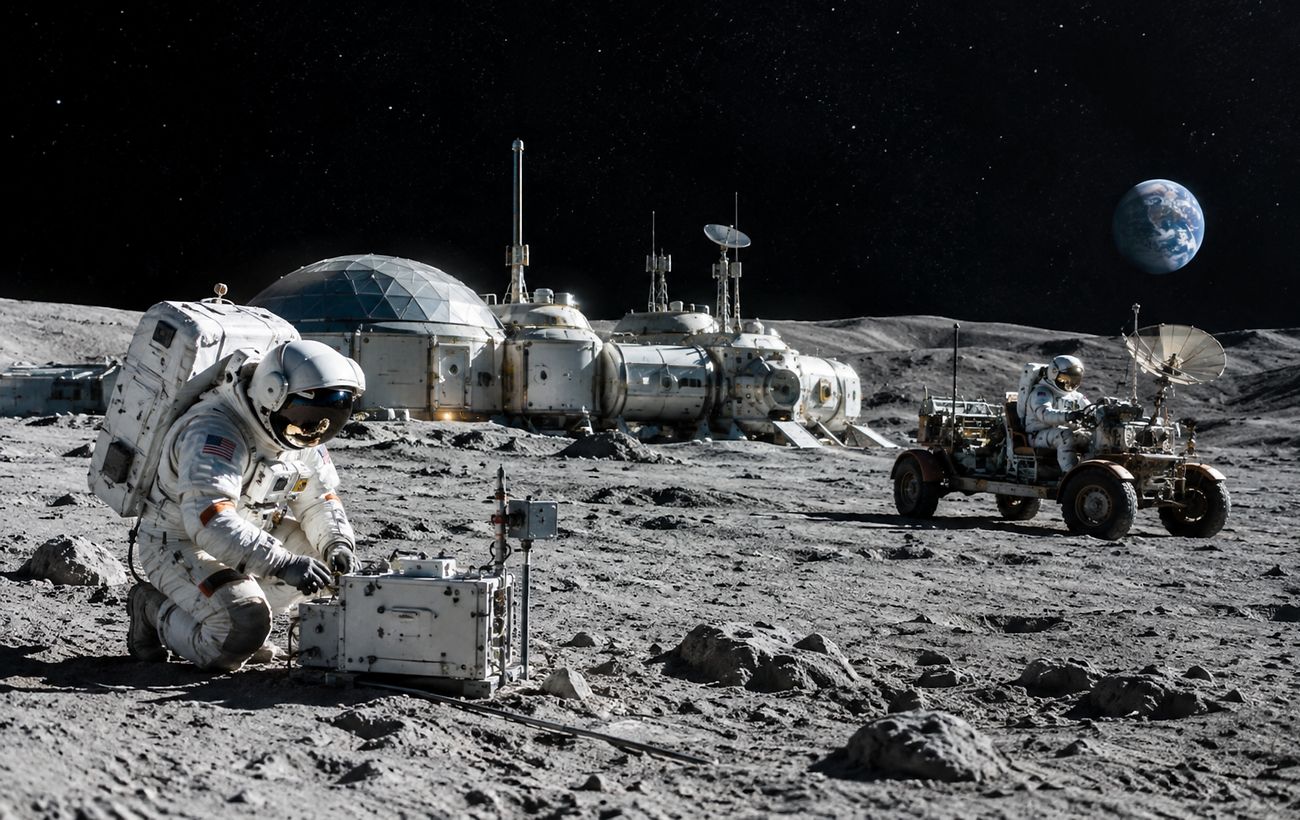
Establishing a permanent base beyond our home planet presents massive engineering challenges, ranging from reliable shelter to continuous energy supplies. NASA and international researchers are currently focusing on seven essential technologies needed to make long-term lunar habitation possible.
Power and Local Resources
Since solar panels alone cannot handle the two-week lunar night, engineers are designing alternative power sources, including compact nuclear reactors like the Lunar Reactor-1, slated for delivery by 2030. These systems will ensure uninterrupted electricity regardless of environmental conditions.
Furthermore, the utilization of in-situ resources, known as ISRU, will minimize costly cargo deliveries from Earth. Extracting water ice from permanently shadowed craters at the lunar south pole will provide hydration, life support, and ingredients for rocket propellant.
Mitigating Space Hazards
Harsh conditions such as abrasive lunar dust and intense cosmic radiation demand robust engineering solutions. Future habitats are planned to be covered with thick layers of regolith for radiation shielding, while specialized electrodynamic shields will help keep equipment clean.
Source RBC-Ukraine — rbc.ua/ukr/news/vid-dernogo-reaktora-5g-shcho-potribno-nasa-1794836… ↗
Read next
 🏛️Politics
Seven EU Countries Urge Immediate Visa Ban for Russian and Belarusian Athletes
Leaders of seven Nordic and Eastern EU nations have called on top EU officials to immediately stop issuing visas to Russian and Belarusian athletes, preventing Russia fro…
 🎓Education
NASA study: how space radiation affects astronauts' brains
NASA researchers have discovered that prolonged exposure to space radiation alters brain immune cells, though it does not cause immediate behavioral impairments.
 👥Society
Fishing in 2026: Current Limits and Regulations
Ukraine enforces strict recreational fishing regulations, limiting daily catches to three kilograms per person. Violations can result in significant fines and confiscatio…
 👥Society
Court denies appeal for Valentyna Molodaya: details of the incident in Petropavlivska Borshchahivka
The Kyiv Court of Appeal has rejected the defense's appeal, keeping the suspect in custody for allegedly obstructing the activities of the Armed Forces of Ukraine.
 🏛️Politics
Appeals court upholds detention of woman posing as paramedic during military facility blockade
The Kyiv Court of Appeal has rejected an appeal from a woman suspected of obstructing the National Guard, keeping her in custody without bail.
 👥Society
DIU medics rescue civilians after enemy drone attack in Zaporizhzhia
The 'Artan' special unit promptly evacuated passengers from a public bus targeted by a Russian FPV drone.