Lithuania Unveils Plan to Fortify Border with Russia's Kaliningrad Region
The Lithuanian Ministry of the Interior has developed a strategy to install physical barriers and enhance surveillance along the border with the Russian exclave.
 🚨Events
Photo: Ukrainska Pravda
Key points
- Lithuania's Interior Ministry has finalized a plan to fortify the Kaliningrad border.
- The plan includes segment fences and concertina wire on land sections.
- Natural barriers like the Neman River require specialized surveillance instead of continuous fencing.
- Additional government funding is required to implement the VSAT-developed strategy.
The Ministry of Internal Affairs of Lithuania has officially presented a strategic plan to bolster security on the border with the Kaliningrad region of the Russian Federation. The document, prepared by the State Border Guard Service (VSAT), outlines a series of measures aimed at creating a robust shield against potential threats. Donatas Škarnulis, the acting head of the service, presented the findings to Interior Minister Martynas Katelinas, identifying key areas that require immediate attention.
Engineering Solutions and Geographical Challenges
Unlike the border with Belarus, where Lithuania has already implemented large-scale fencing projects, the boundary with the Russian exclave possesses unique characteristics. A significant portion of the border runs through water bodies, including the Neman River, and covers the Curonian Spit and the economic zone in the Baltic Sea. Due to these natural features, direct replication of the Belarusian border model is impossible, forcing specialists to seek tailored approaches for each specific section.
According to Minister Katelinas, the plan involves installing physical barriers only where practical from a landscape and strategic security perspective. "The physical barrier consists of a so-called segment fence, followed by concertina wire as an additional obstacle," the head of the Ministry explained. This approach will allow for a multi-layered defense system on the most vulnerable land sections, ensuring control over movement and preventing unauthorized crossings.
Funding and Long-Term Security Strategy
Implementing this ambitious project requires additional budgetary resources. Martynas Katelinas emphasized that despite the work already completed on the Belarusian front, strengthening the border with Kaliningrad is an equally vital task for national security. The government hopes to resolve funding issues promptly to begin the practical phase of the work. This decision aligns with the stance of Armed Forces Commander Raimundas Vaikšnoras, who previously called for border fortification to be viewed as a long-term investment in the country's defense capabilities.
Source Ukrainska Pravda — pravda.com.ua/news/2026/11/19/8063574/ ↗
Read next
 🏛️Politics
Seven EU Countries Urge Immediate Visa Ban for Russian and Belarusian Athletes
Leaders of seven Nordic and Eastern EU nations have called on top EU officials to immediately stop issuing visas to Russian and Belarusian athletes, preventing Russia fro…
 🎓Education
NASA study: how space radiation affects astronauts' brains
NASA researchers have discovered that prolonged exposure to space radiation alters brain immune cells, though it does not cause immediate behavioral impairments.
 👥Society
Fishing in 2026: Current Limits and Regulations
Ukraine enforces strict recreational fishing regulations, limiting daily catches to three kilograms per person. Violations can result in significant fines and confiscatio…
 👥Society
Court denies appeal for Valentyna Molodaya: details of the incident in Petropavlivska Borshchahivka
The Kyiv Court of Appeal has rejected the defense's appeal, keeping the suspect in custody for allegedly obstructing the activities of the Armed Forces of Ukraine.
 🏛️Politics
Appeals court upholds detention of woman posing as paramedic during military facility blockade
The Kyiv Court of Appeal has rejected an appeal from a woman suspected of obstructing the National Guard, keeping her in custody without bail.
 👥Society
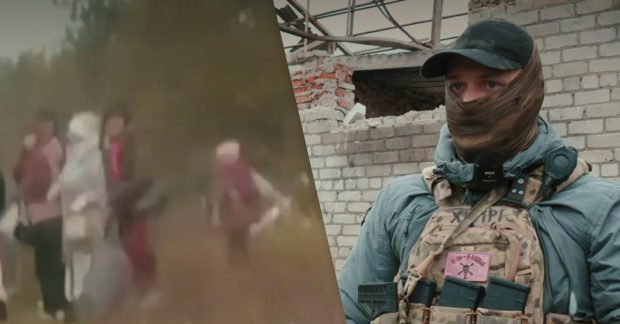
DIU medics rescue civilians after enemy drone attack in Zaporizhzhia
The 'Artan' special unit promptly evacuated passengers from a public bus targeted by a Russian FPV drone.